Dantsoho: Balancing Ports Infrastructure Rehabilitation for Operational Efficiency

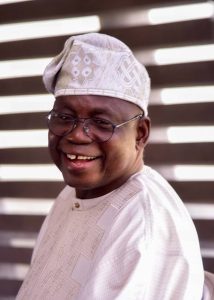
Dantsoho, MD, NPA
For the maritime industry stakeholders, ranging from terminal operators, multinational shipping agencies, shippers and freight forwarders, among others, the much awaited time for the rehabilitation of the nation’s decayed infrastructure is finally here. Over the decades, the nation’s seaports have been suffering infrastructure decay. The plans to rehabilitate the ports infrastructure have lasted for years now, long before the present administration of President Ahmed Bola Tinubu. It has been one of bureaucratic bottlenecks. Notably, the issues have been securing necessary approvals and funds to carry out the project. And thanks at last that the infrastructure renewal is now a reality. The rehabilitation means so much to all the stakeholders. It will reposition the country’s seaports when completed in a about a year or two. It will bring about positive impact to the industry as well as the national economy. Ports infrastructure maintenance requires huge capital, and this probably explains the concessioning of the seaports in 2006. It was reduce the burden on government. Imagine if it was the NPA as the Landlord of the system that has to carry out cargo discharge operations. The financial burden on logistics would have been so huge and overwhelming considering the capital projects that the organization has to deal with. Under the landlord port system both government and the concessionaires have different jurisdictional corporate structural responsibilities as far as ports operation is concerned. The NPA is saddled with providing and maintaining common user facilities such as “internal roads, illumination, dredging, buoyage, pilotage, towage, and other technical enablers of safe navigation”. On the other hand, the concessionaires, otherwise known as terminal operators provide such services as cargo handling, receiving and loading of cargoes, coordinating post- arrival logistics, truck scheduling, and inland delivery. Both NPA and the concessionaires have no doubt done well in terms of carrying out their statutory obligations since the concessioning of the seaports. However, stakeholders are of the strong view that the federal government should carry out rehabilitation of the old infrastructure to achieve more efficiency in trade facilitation.
Fund for Infrastructure Upgrage
Few months ago, the Presidency announced a £746 million infrastructure financing agreement reached between Nigeria and the United Kingdom. This was during the visit of President Bola Ahmed Tinubu to the United Kingdom. The journey to secure a foreign loan has been long, years before the present administration. Under the former administration of late President Muhammadu Buhari, there was indication that the project would require about $1bn. That was before the £746 million financing arrangement from the UK.
NPA’s Stakeholders’ Engagement
Few weeks ago, the NPA gave indications of its readiness to flag off the reconstruction work on the infrastructure. The take-off was given as end of third quarter of 2026 in what is interpreted as simply here. The authority was indeed reacting to concerns raised by some stakeholders that work should start. In a recent press statement, the authority explained that what appeared like delay in the take-off of the project was to enable it carry out consultations and engagements with the affected host community before mobilisation of contractors to site. The General Manager, Public Affairs of the NPA, Mr. Ikechukwu Onyemekara, disclosed that the organization is currently concluding non-construction processes to enable contractors begin work. The GM had explained that the stakeholders and community engagements were very necessary since they are critical considering the scale of activities once construction starts.
The community engagements, he explained, is to prepare port users as well as communities over the presence of heavy equipment and other construction activities.
According to him Onyemekara, “You know, when they start, there will be a lot of construction activities—heavy equipment, noise and all that. We want to sensitise the stakeholders and the host communities about what is coming so that everyone understands the scope of the project”.
Expectations from stakeholders
As the upgrade begins, the federal government’s decision to secure financing agreement for the purpose of modernising the Apapa and Tin Can Island ports in Lagos has created worries among the stakeholders. It has been a subject of different interpretations. Some stakeholders hold the view that the financing agreement is limited to the rehabilitation of Lagos ports. By implication, they hold the view that the Eastern ports of Warri, Calabar, Onne and Port Harcourt may probably be ignored by the government. Some stakeholders even claim that this is aimed at denying traffic to the ports in the East so that Lagos ports continue to boom. But it is strongly believed that this is not so.
From all indications, the NPA is committed to balancing ports infrastructure rehabilitation to cover all the seaports in Nigeria, including those of the Eastern region. In December last year, the management of NPA had given an update on the project. The management had at a Citizens’ Engagement Meeting unveiled a port rehabilitation and modernization project programme meant to cover all the seaports.
This involves total upgrade of key ports and the implementation of a Port Community System (PCS). No one is in doubt the inclusion of Onne, Calabar, Warri, Port Harcourt, otherwise referred to as Eastern ports are part of this programme.
In the reconstruction exercise involving the $1 billion port modernization fund, the NPA contractors involved are expected to tackle a number of areas. Key in the rehabilitation is all the seaports throughout the country, particularly decaying quay walls. Apart from other infrastructures upgrade, the channels are also expected to be deepened. This in turn will impact positively on vessel turnaround times that will boost trade competitiveness. In Apapa and Tin Can seaports, reconstruction will involve about 4,500 meters of combined quay walls. Similarly, in the Eastern ports, reconstruction is targeting six berths. Part of this will be berth 7 and 8 at the Rivers Port. Others in Delta state are the Escravos breakwaters and deepening of the main navigational fairways so that bigger container vessels can be accommodated.
Beyond physical rehabilitation of infrastructures at the ports, the NPA is expected to deepen operational efficiencies by deploying the Port Community System (PCS) to achieve paperless cargo clearance of goods at the ports. This is what the National Single Window framework is all about. The authority will equally implement satellite truck parks and strict time-belt scheduling to address the issue of logistics congestion at the ports. This is part of the traffic management at the ports. Under the multimodal logistics, the NPA is equally expected to expand interconnectivity within inland waterways, rail integrations, as well as Inland Dry Ports so that goods can be cleared as fast as possible in areas of operations.
NPA’s Position on Eastern Ports Rehabilitation
In apparent affirmation of readiness and commitment to rehabilitate other ports apart from the Lagos ports, the NPA has said it is not true that Eastern ports are being neglected by the federal government. The Authority told maritime journalists recently that the government is investing in infrastructure upgrade in the Eastern ports to ensure their competitiveness as well as attract cargo traffic.
This was the position of the Manager of the Rivers Port Complex, Kenechi Okaeze, when she spoke on behalf of the Minister of Marine and Blue Economy, Adegboyega Oyetola, she represented at a seminar organised by maritime journalists.
According to her, rehabilitation and modernization works have been going on across the Eastern ports. Okaeze said, “It is not correct to say that management has abandoned the Eastern Ports. Some facilities are already being rehabilitated and management remains committed to their development”. For instance, she said that berths 7 and 8 at Rivers Port Complex are ready for reconstructing strengthening for the purpose of arriving at more operational efficiency to accommodate bigger vessels.
She added that navigation channels are equally being deepened to enable larger vessels to berth directly at the ports. She said this will reduce logistics costs as well as ease the movement of cargo being transported by road from the seaports to other parts of the country.
Akaeze explained that the Eastern Ports occupy strategic positions in view of the proximity to key commercial markets, adding that they remain critical to improving country’s maritime logistics. According to her, this will help in reducing pressure on road infrastructure.
She stated that increased vessel traffic to the Eastern Ports would go a long way in reducing the risk suffered by those who embark on long distance haulage of cargo by road.
She was full of optimism that the rehabilitation project will restore the Eastern Ports in achieving significant growth again. She said, “I assure you that very soon the Eastern Ports will begin to experience significant growth again”
It would be recalled that the Managing Director of NPA, Dr. Abubakar Dantsoho had also while receiving the Chairman of BUA Group, Abdul Samad Rabiu, in his office confirmed that six berths at the Rivers Port , Port Harcourt, as being reconstructed. Dantsoho said this was mainly part of the efforts to expand cargo handling capacity at the Eastern ports.
Dantsoho disclosed that his organisation has been working with private investors for the purpose of strengthening cargo operations at eastern ports to improve their competitiveness. Noting that this coincides with the $85 million expansion of BUA Ports and Terminals in Port Harcourt, Dantsoho said increased private sector investment will lead to higher cargo volumes, rise in trade as well as higher revenue for the country. Dantsoho said, “On a normal day, 16 percent is expected anywhere in the world in the port industry. “So with this kind of development, I’m sure we can get like 13-14 per cent, which is a very fantastic thing to happen.”
According to the NPA CEO, port modernization remains a landmark initiative deliberately designed to ensure comprehensive overhaul of ageing quay walls, deepening of navigational channels and full automation of terminal infrastructure in all locations in the ports. As part of the modernization project, NPA has equally acquired state-of-the-art tugboats and pilot cutters. The MD recently disclosed that rehabilitation of damaged quay walls at Tin-Can and Apapa has started. In addition, modern Vessel Traffic Service technology to monitor the nation’s territorial waters are also being installed.
With the country recording trade surpluses since 2024, and another N7.54 trillion in the first quarter of 2026, stakeholders are of the view that this will continue considering the ongoing investment drive in ports facilities. The NPA boss believes that the targets of ports reforms are to reduce unnecessary bottlenecks and ensure Nigeria’s competitiveness in the global maritime arena. Dantsoho while praising the government for ports infrastructure update, said this has laid the foundation for continued trade performance.
Dantsoho was quoted saying, “With the investor-friendliness of President Bola Ahmed Tinubu providing the gravitas needed for increased investment to implement our port infrastructure and equipment modernisation drive, coupled with the unflinching support from the Honourable Minister of Marine and Blue Economy, Adegboyega Oyetola, we have all it takes to advance the fortunes of trade and boost the national economy. ”
Responding to the topical issue of cargo imbalance between Lagos and the Eastern ports, the Minister of Marine and Blue Economy, Dr Adegboyega Oyetola made it clear that this is as a result of decades of infrastructure, investment, operational and historical factors.
But Oyetola assured that this is being corrected, affirming, “it can be corrected and must be corrected”
Speaking at a seminar in Lagos in a topic titled “Lagos/Eastern Ports: How to Reverse Existing Imbalance in Disproportionate Cargo Vessel Calls”, Oyetola gave details of how the imbalance is being corrected.
Oyetola disclosed that the federal government approach is one of deliberate policy, strategic sequencing, infrastructure investment, private-sector participation, digital transformation, improved security and stronger multimodal connectivity
He said, “Our approach is therefore one of deliberate policy, strategic sequencing, infrastructure investment, private-sector participation, digital transformation, improved security and stronger multimodal connectivity. In this regard, the modernisation of the Eastern ports is not being conceived as an isolated regional intervention. It is part of a broader national strategy to develop a resilient, competitive and interconnected port system.
“The commencement and prioritisation of interventions at the Western ports should therefore not be interpreted as a choice between Lagos and the East. It is about building a stronger Nigerian maritime system, one in which Lagos continues to serve as a major maritime gateway, while Onne, Port Harcourt, Warri, Calabar and other viable ports are developed to handle a greater and more diversified share of national and regional trade.
“Our vision is a Nigeria where cargo moves through the gateway that provides the greatest efficiency, reliability and value, irrespective of its geographical location. That is the port system we are working to build. And when we achieve it, the benefits will go far beyond the ports themselves. We will reduce logistics costs, strengthen regional economies, attract investment, create jobs, improve trade competitiveness and reinforce Nigeria’s position as a leading maritime and logistics hub in West Africa”.
About Post Author