NPERA: Reechoing Stakeholders Enthusiasm, Expectations ….
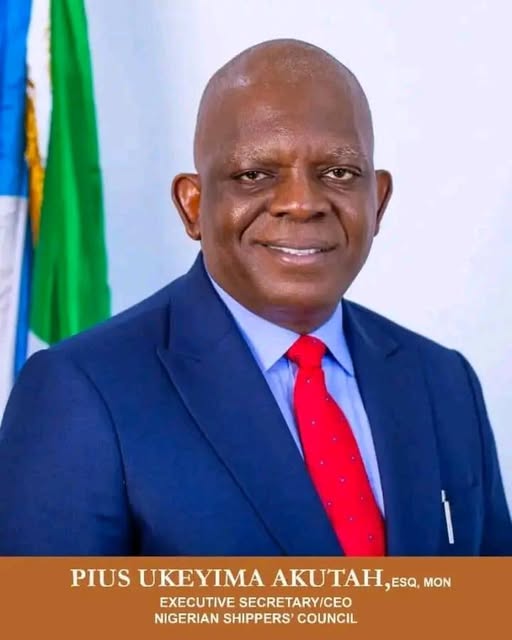
Dr. Akutah

For the Nigerian Shippers’ Council (NSC), now Nigerian Ports Economic Regulatory Agency (NPERA), this is a time of celebration. After about 12 years, the Council as an economic regulator was fully empowered to carry on its statutory obligations. The Council has been facing a lot of challenges for lacking adequate powers to carry out its statutory functions. The power of economic regulation followed presidential powers granted the Council by the former government of President Goodluck Jonathan. That was in 2014. But shortly after this, some multinational shipping lines and terminal operators did not appear to recognize this. The shipping service providers went ahead to introduce illegal charges without the approval of the Council as the ports economic regulator. Their argument was that the executive powers granted the Council as ports economic regulator was not legal enough. This was why the service providers decided to go to court to challenge the Council when it suspended some of the illegal charges they were collecting in 2014. Incidentally, the shipping service providers lost the case and were ordered to pay N1trillion to the Council and the Nigerian shippers. They again headed to the Appeal Court where they lost a s well. The unrelenting shipping service providers this time headed to the Supreme Court where they have remained till date. However, five of the shipping companies have decided to call it a quit, preferring instead to settle out of court with the Council. The five shipping companies had paid N60bn as part of the settlement out of court. It is believed that some of them still in court may decide to change their mind and embrace out of court settlement like others.
It would be recalled that years back, there was a move by the management of the Council to transform into the National Transport Commission (NTC). The idea was that the NTC would have more powers of economic regulation. This, however, could not work out. It remained in the limbo until industry stakeholders made second moves that led to the sponsorship of the NPERA bill that has now been given assent by the President. The NPERA bill was almost frustrated but for the strong fight of the backers which cut across many stakeholders, including the executive of the present administration. Initially, NPERA bill failed assent on a number of occasions during the administration of former President Muhammed Buhari because of the influence of some power brokers surrounding him. It could be that some shipping service providers may have rejoiced over the initial travails of the Council in getting the NPERA bill sail through. But now, it is all over. The weak legal structure is now over with the new status of the agency changing to having full on rules and oversight for tariffs, rates and all charges. It is also saddled with issuance of operational licenses and monitoring of standards for providers of shipping services.
Tinubu as Promoter of Maritime Devt
President Ahmed Bola Tinubu is no doubt a big blessing to the nation’s maritime industry. It was under Tinubu’s administration that the Marine and Blue Economy Ministry was created. It was carved out of the Transport Ministry. The new Ministry has been of tremendous benefit to the maritime industry. Before then, industry stakeholders, including the former President of Nigerian Bar Association, Mr Olisa Agbakoba SAN, had stressed the need for a separate ministry for the maritime industry because of the potentials. Talking about the fortunes of the industry under Tinubu, the NPERA bill assent may probably not have seen the light of the day without him. It took the strong will of the President to stop the efforts to scuttle the passage of the bill. This indeed remains a big applause for the President.
Reacting to the assent of the bill, the League of Maritime Editors (LOME) commended President Bola Tinubu for always showing interest in the development of the Marine and Blue Economy.
“First, it was the establishment of the Marine and Blue Economy in 2023, and now it is the passage of the law that will move the industry forward, particularly in the areas of shipping services and ports operations. We are happy with the President over this development, and we say a big applause to him and the Minister , Dr. Adegboyega Oyetola for the passage of the NPERA bill after several years of politicking. Its passage was stopped by the former late President Muhammadu Buhari apparently because he listened to those against the bill. We are happy that President Tinubu acted differently. It is now the NSC management to take advantage of the benevolence of the President in passing the law”..
Now is Action
In its congratulatory message to NPERA on the bill, LOME noted that the passage into law now paves the way for the establishment of a dedicated economic regulator for ports. The League noted the perseverance and tenacity with which the Council pushed for the passage of the law that will not just empower it as a ports regulatory agency, but also impact on the efficiency of ports operation.
In a press statement, the President of the League of Maritime Editors (LOME), Mrs Remi Itie, expressed excitement about the assent to the Bill after several attempts that failed over bureaucratic bottlenecks involving some agencies of the Marine and Blue Economy Ministry.
The League appealed to the leadership of the Council to regard the passage of the Bill into law as a strong call to improve on the efficiency of the nation’s ports which in effect will impact on the national economy.
League said the Council should hit the road running, settle down to action to address decades of illegalities by either providers or consumers of shipping services.
Noting the flagrant abuse of laid down procedures and due processes while trying to introduce new shipping charges, among other irregularities, the League said the new law now empowers the Council to hit hard where necessary for the interest of the shipping industry and the national economy.
“This is the time to check the activities of some multinational shipping lines, terminal operators, bonded terminal operators over the ills of the past 12 years now. We refer to some shipping service providers who had held the strong belief that the Council had no strong legislative powers to check them. Now that the NPERA bill has been signed into law, the NSC should reactivate its enforcement machinery to give the Nigerian shipping community and all stakeholders the much expected effective regulation”, the League said.
Task Before NPERA, By Stakeholders
The Sea Empowerment and Research Centre (SEREC), while reacting to the assent of the NPERA bill into law opined that with this, Nigeria now has an opportunity to strengthen economic regulation around tariffs, charges, licensing, competition, service standards, dispute resolution and port-user protection. The group wants the NPERA mandate to evolve beyond the question of what should the port user pay to the broader question of what does the port system cost, who receives the money and what service is delivered and what economic value that expenditure produce. Head of Research of SEREC argues that NPERA should become not only a tariff regulator but a port economic intelligence institution. To Nweke the agency should should develop capacity to analyse: – ‘port revenue; – tariffs; – concession economics; – infrastructure costs; – service charges; – operating costs; – investment; – productivity;
– port-user costs and economic returns”
Our Resolve After NPERA Law
Reacting to what the agency feels could be the perception of some industry stakeholders, the Director-General of Nigerian Ports Economic Regulatory Agency, (NPERA), Dr. Akutah Pius, allayed the fears of stakeholders over the new powers of the agency, saying that there will not be any institutional rivalry.
Explaining that the law makes it clear with the role of NPERA as the ports economic regulator, the DG described its assent as a major breakthrough for the maritime sector, adding that it will strengthen the powers of the agency to control sharp practices in the system and improve efficiency in the ports.
He also said it will promote Nigeria’s competitiveness in the global port sector.
He added that what NPERA sets out to do is to “promote a healthy sector that will grow the economy of Nigeria”
Akutah assured that the agency will work with all the sister agencies and the Nigerian Ports Authority (NPA) in particular to deepen reforms and bring about increased service delivery in the ports sector.
Akutah who spoke during a townhall meeting with members of staff urged the personnel to be more committed in professionalism under the new mandate of the agency.
He said that part of the transition from the Nigerian Shippers’ Council to NPERA should be a clear shift in work culture and operational attitude so as to achieve delivery as effective economic regulator in Nigerian ports.
Akutah while speaking at the seminar organised by the League of Maritime in Lagos, noted that its role is now much broader than the regulation of tariffs. He said that the agency occupies a strategic position at the intersection of regulation, trade facilitation and national economic development, emphasizing that its mandate shall be to protect shippers, promote competition, regulate economic activities, monitor service standards, facilitate dispute resolution and reduce the cost of doing business.
He further explained that such focus shall bring about a significant influence over the structure and performance of Nigeria’s port system, adding, “but equitable cargo distribution cannot be achieved through regulation alone”.
Akutah who was represented on the occasion by the Acting Director, Ports Monitoring and Regulatory Services, Ms Adaora Nwonu, stated that “It requires a combination of competitive ports, efficient terminals, transparent charges, reliable shipping services, modern customs processes, digital systems, effective rail and inland-waterway connections and a strong regulatory framework”.
According to him, “The objective should not be to force cargo away from one port and towards another.
“Rather, Nigeria should create a port system in which no port is artificially favoured, no port is unnecessarily disadvantaged, and every viable port has the opportunity to compete for cargo on the basis of efficiency, cost, capacity and service quality.
“This is the essence of trade facilitation.
“And this is where the Nigerian Shippers’ Council can make one of its most consequential contributions to Nigeria’s maritime future: not only by regulating ports, but by helping to create a competitive national port economy in which cargo moves through the most efficient corridor to its final destination”.
He challenged the media to keep asking the difficult question:
“Are Nigeria’s ports competing for cargo, or are Nigeria’s cargoes still competing for access to a few preferred ports?”
The answer, according to him, “will tell us much about whether Nigeria’s port reforms are truly delivering the competitive, efficient and trade-friendly maritime economy that the country needs”.
About Post Author