Why Shipping Coys, Freight Forwarders Must Dialogue on Increase in Shipping Charges, by Shippers’ Council CEO
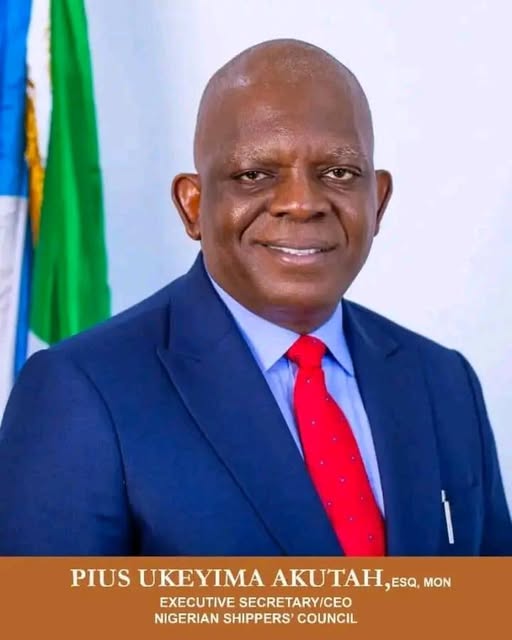
Dr. Akutah
*Anifowose tasks staff on performance driven strategy to achieve council’s vision of efficient service delivery
By Chinonso Apeh
The Executive Secretary of the Nigerian Shippers’ Council (NSC), Dr Pius Akutah, has said that there is the need for shipping service providers and consumers to have a robust dialogue before increase in shipping charges in the ports.
Specifically, Akutah said multinational shipping companies in Nigeria and freight forwarders should be able to reach an agreement on shipping charges by the service providers.
The NSC CEO who spoke to newsmen in Abeokuta where the Council is holding retreat for the management staff said shipping companies should have a dialogue with the freight forwarders to be able to address the current dispute between them on tariff hike.
According to him, both shipping companies and freight forwarders must have to shift their different positions to be able to arrive at a beneficial agreement.
He said that whatever discussions between the two should guided by the spirit of compromise and mutual understanding.
He explained that in the past, the Council as ports economic regulator turned down the requests for an increase in charges for two years, adding that such request was not aimed at profit-making or to raise profit margins.
Akutah further explained that as far as the Council is concerned a mutual engagement is significant for the sake of ensuring stability in the shipping sector and avoiding operational challenges in the ports.
Akutah told journalists: “I think that they need to work together more harmoniously to resolve these issues. We as a regulator have given the approval. It is left for the shipping companies and the freight forwarders to come to a harmonious stand where they can implement this.
“So, there must be a reason for people to move, shift ground it should be a give and take relationship. Whenever there is a stand down and nobody is moving, then there’s a problem. I am not speaking on behalf of the shipping companies, nor am I speaking on behalf of the Freight forwarders but I think they need to work together more harmoniously to resolve these issues.
“We as regulator have given the approval, it is left for the shipping companies and the Freight forwarders to come to a harmonious stand where they can implement this.
“We cannot sit and watch this without taking steps. It will get to a point where we can escalate this to the level of the minister if they fail to resolve it.
“Recently, we tried to see how we can wade into this to see how they can resolve this but this has kept going on. We are calling on both sides to go back to the table and see how they can resolve this issue and move on.
“It is for the stakeholders in this sector to also understand that ours is also a relationship that needs to continue to roll on each other so that we can all move together.
“If they say there won’t be any hike in charges and at the end of the day, the cost of operation has hindered them from carrying out their functions, then we will not have a maritime sector.”
The Director of Planning, Research and Statistics of the Council, Mr Rotimi Anifowose in his welcome address on the occasion, called for performance driven strategy in the agency to achieve efficient service delivery.
Anifowose said the vision of the management is to position the agency as a “credible ports economic regulator, a technology-enabled institution, a proactive stakeholder partner and a measurable contributor to Nigeria’s trade competitiveness and marine economy development”.
He said that to achieve this, the vision has to be backed by performance as well as clinical execution by the staff.
According to him, “Strategy alone does not create impact, execution does. The difference between institutions that plan and institutions that perform lies in execution discipline.
“The demand for efficiency, predictability, and transparency is rising.
” In this environment, execution is not optional, it is essential. If we execute effectively, Stakeholder confidence deepens, Institutional credibility strengthens, regulatory authority becomes respected and our contribution to national economic objectives becomes visible and measurable.
“If we fail in execution, even a strong mandate can lose momentum” .

By Chinonso Apeh
The Executive Secretary of the Nigerian Shippers’ Council (NSC), Dr Pius Akutah, has said that there is the need for shipping service providers and consumers to have a robust dialogue before increase in shipping charges in the ports.
Specifically, Akutah said multinational shipping companies in Nigeria and freight forwarders should be able to reach an agreement on shipping charges by the service providers.
The NSC CEO who spoke to newsmen in Abeokuta where the Council is holding retreat for the management staff said shipping companies should have a dialogue with the freight forwarders to be able to address the current dispute between them on tariff hike.
According to him, both shipping companies and freight forwarders must have to shift their different positions to be able to arrive at a beneficial agreement.
He said that whatever discussions between the two should guided by the spirit of compromise and mutual understanding.
He explained that in the past, the Council as ports economic regulator turned down the requests for an increase in charges for two years, adding that such request was not aimed at profit-making or to raise profit margins.
Akutah further explained that as far as the Council is concerned a mutual engagement is significant for the sake of ensuring stability in the shipping sector and avoiding operational challenges in the ports.
Akutah told journalists: “I think that they need to work together more harmoniously to resolve these issues. We as a regulator have given the approval. It is left for the shipping companies and the freight forwarders to come to a harmonious stand where they can implement this.
“So, there must be a reason for people to move, shift ground it should be a give and take relationship. Whenever there is a stand down and nobody is moving, then there’s a problem. I am not speaking on behalf of the shipping companies, nor am I speaking on behalf of the Freight forwarders but I think they need to work together more harmoniously to resolve these issues.
“We as regulator have given the approval, it is left for the shipping companies and the Freight forwarders to come to a harmonious stand where they can implement this.
“We cannot sit and watch this without taking steps. It will get to a point where we can escalate this to the level of the minister if they fail to resolve it.
“Recently, we tried to see how we can wade into this to see how they can resolve this but this has kept going on. We are calling on both sides to go back to the table and see how they can resolve this issue and move on.
“It is for the stakeholders in this sector to also understand that ours is also a relationship that needs to continue to roll on each other so that we can all move together.
“If they say there won’t be any hike in charges and at the end of the day, the cost of operation has hindered them from carrying out their functions, then we will not have a maritime sector.”
The Director of Planning, Research and Statistics of the Council, Mr Rotimi Anifowose in his welcome address on the occasion, called for performance driven strategy in the agency to achieve efficient service delivery.
Anifowose said the vision of the management is to position the agency as a “credible ports economic regulator, a technology-enabled institution, a proactive stakeholder partner and a measurable contributor to Nigeria’s trade competitiveness and marine economy development”.
He said that to achieve this, the vision has to be backed by performance as well as clinical execution by the staff.
According to him, “Strategy alone does not create impact, execution does. The difference between institutions that plan and institutions that perform lies in execution discipline.
“The demand for efficiency, predictability, and transparency is rising.
” In this environment, execution is not optional, it is essential. If we execute effectively, Stakeholder confidence deepens, Institutional credibility strengthens, regulatory authority becomes respected and our contribution to national economic objectives becomes visible and measurable.
“If we fail in execution, even a strong mandate can lose momentum” .
About Post Author