Capt Abidoye: Why Nigeria Must Prepare for IMO’s Autonomous Ship Regime in 2032
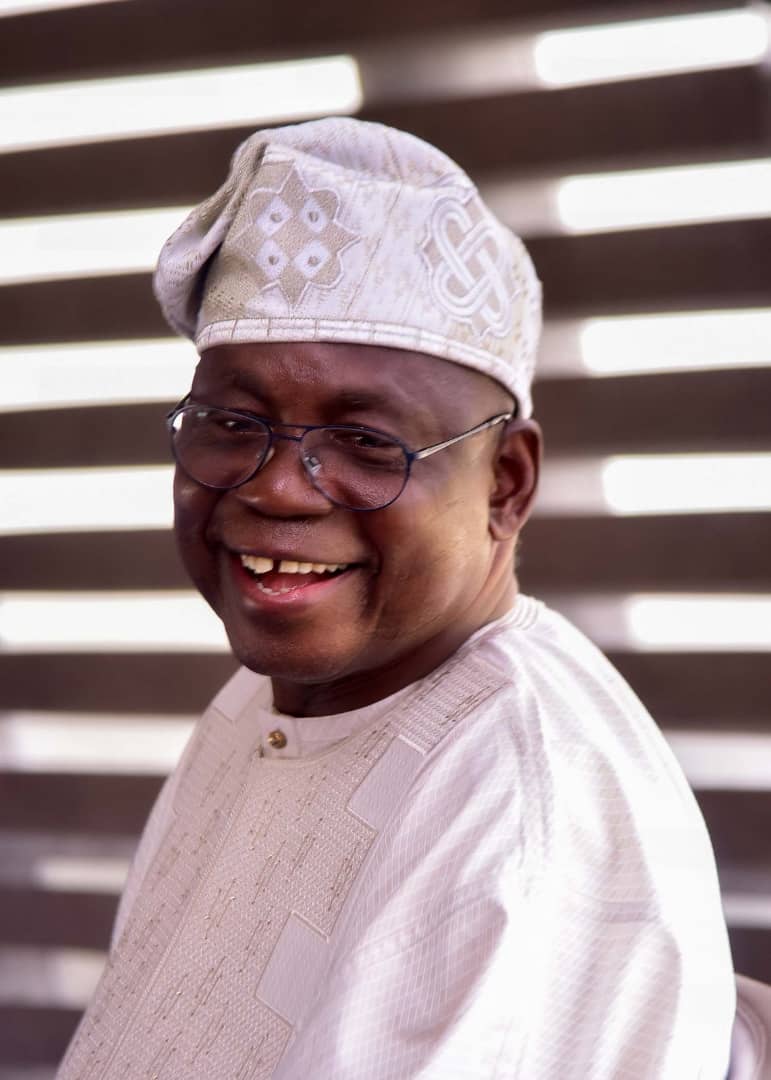
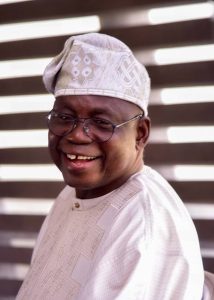
Capt Abidoye
By Francis Ugwoke
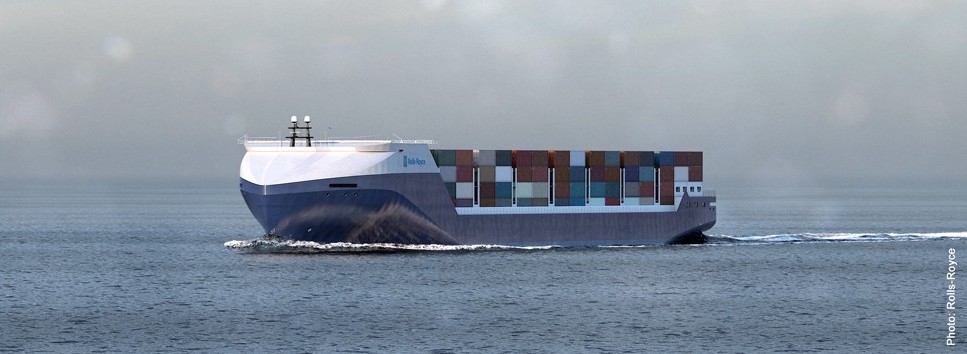
Following technological innovations in the maritime industry, new model ships known as autonomous ships are expected to begin commercial operations soon, a development that poses a lot of challenges for developing nations with weak infrastructure.
Already the International Maritime Organisation (IMO) has adopted a new Code of Safety for Maritime Autonomous Surface Ships (MASS Code) in May 2026.
The new code which took effect from July this year requires that maritime nations who are members of the IMO have 2032 deadline to key into the regime.
Autonomous ships refer to ships that are sailing from one destination to another without crew on board. Experts say they could be controlled remotely or even fully autonomous.
Maritime nations where these ships will be in use are expected to be ready in terms of technological advancement in all spheres of infrastructures on the waters, ports and human capacity.
A maritime expert, Master Mariner and former Executive Director of Nigerian Ports Authority (NPA), Capt Olugbemiga Abidoye said that all Nigeria needs is to be ready with facilities and legal provisions.
In a paper titled, ‘What Nigeria Must Do Before Autonomous Ships Arrive’, Abidoye said “technology and institutions must develop together. You cannot buy a Level 3 autonomous ship and keep a Level 0 harbour manual from 1985. If ship is autonomous, port must also be autonomous in law, in command, in technology”.
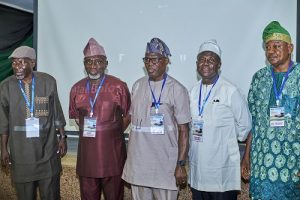
Abidoye in his paper presented at the Annual General Meeting (AGM) of the Association of Master Mariners held in Lagos weekend where he received award states:
“I will take you to the last part of my thesis, from Gap 5 to my final conclusion.
“*Gap 5: When an unmanned ship catches fire alongside.*
”Chairman, this is my nightmare. Today if a ship catches fire in Apapa, I pick VHF – “Chief, close fuel valve number three!” Chief closes, fire stops. We have a man inside.
“MASS has no Chief Officer. No engineer. No one to close valve. No one to start CO2. The ship will burn while we watch from the quay.
“And I asked in my research – who will board? I interviewed NPA Fire Service, they said “We lead.” I interviewed NIMASA, they said “We lead.” I interviewed Navy, they said “We lead.” When I did a tabletop simulation of that fire, all three waited for each other for 22 minutes. In 22 minutes, Apapa will burn.
So emergency plans and intervention authority must be agreed before, not during fire. You cannot discuss who will board when fire is burning.
My thesis proposes two things. First, a pre-signed MASS Emergency Charter before ship arrives – who has override to start CO2 from shore, who boards with breathing apparatus, who takes liability if ship sinks at berth.
Second, what we call Joint Optimisation. Technology and institutions must develop together. You cannot buy a Level 3 autonomous ship and keep a Level 0 harbour manual from 1985. If ship is autonomous, port must also be autonomous in law, in command, in technology.
That is Gap 5.
*So what is the solution? I propose a National Readiness Program.*
Chairman, after finding gaps, I did not stop at complaining. I built a program for Nigeria. In the center – National Readiness Program. Around it – five priorities that must work together.
Number One – National Coordination Framework. Today NPA, NIMASA, NIWA, Navy, Customs work in silos. We need one MASS Readiness Committee under Ministry of Marine and Blue Economy to chair all.
Number Two – National Port Readiness Assessment. We scored Apapa 34% ready. But what of Onne? Tin Can? Lekki? We must use my framework to score all ports so we know where we stand before we spend money.
Number Three – Procedures, Standards and Human Capacity. We must rewrite pilotage manual to include remote pilotage. We must write cyber-security standard for ports. And we must train 5,000 workers – harbour masters, pilots, VTS, Customs, Immigration. How does Immigration stamp passport when there is no crew to stamp?
Number Four – Simulations and Controlled Trials. Do not wait for foreign ship. Use simulators at Maritime Academy Oron. Then do live trial with small remotely controlled barge from Ijora to Apapa in daylight.
Number Five – A Phased Program Towards 2032. Why 2032? Because IMO says mandatory MASS Code by 2028. Insurance will force us by 2030. I give Nigeria two years buffer to be ready.
The inner circle is the goal, the outer five is how we get there.
*How do we implement? My logic is simple – Coordinate, Assess, then Build Capacity.*
Many ports make mistake – they buy simulators before they coordinate. I say no.
First – Coordinate. Three tiers. Top tier – Ministry gives policy and money. Second tier – National Assembly amends NPA Act and NIMASA Act to recognize Remote Master. Without law, nothing is legal. Third tier – Joint Technical Task Force – NPA Harbour Master, NIMASA, Navy, Customs, NITDA cyber experts – they will write the new procedures.
Second – Assess. Go and assess five ports – Lagos, Tin Can, Onne, Port Harcourt, Lekki. Lekki is newest, may be more ready. Onne is oil and gas, different risk. We must have National Scorecard.
Third – Only then Build Capacity. Train harbour masters to handle remote instructions, train pilots to be remote pilots, train VTS to monitor unmanned targets, train Customs and Immigration for crewless clearance.
Coordinate first, know your score second, train people third. That is the sequence.
*But Chairman, Readiness must be demonstrated, not declared.*
We cannot write memo “Nigeria is ready.” We must prove it.
How? First – Tabletop exercises. No ship. Just men in a room. Scenario One – unmanned arrival at Lagos with no pilot. Who does what? Scenario Two – loss of communication link in Apapa bend. In my study, when we did tabletop, three agencies gave three different orders. We must fight on table before we fight at berth.
Second – Carefully bounded trials. Not big ship first. Small barge, daylight, good weather. I propose Lekki as feasibility candidate if technically suitable – because Lekki is deeper, less congested, has better 5G than Apapa.
My timeline – 2026 to 2027 Governance – fix law. 2027 to 2028 Standards – write manuals. 2028 to 2029 Testing – tabletop and simulator. 2029 to 2032 Validation – independent audit and give Nigerian ports a MASS Readiness Certificate.
By 2032, when IMO says 10% of world fleet will be autonomous, we will not talk. We will show video.
*Where does Master Mariner stand?*
Master Mariners, we are asking for tasks, not contracts. Many fear autonomous ships will sack seafarers. My thesis says no. Ship loses crew onboard, but needs more brain ashore.
Judgement, discipline and accountability remain essential. Computer cannot use judgement in Harmattan haze. Computer cannot show discipline to stay awake at 2am. Computer cannot go to court to take accountability. Only Master Mariner can.
So we are not losing jobs, we are moving from deck to control room – Remote Master, Remote Pilot, Shore Cargo Controller, Cyber Response Commander. Same seamanship, new station.
Therefore I propose – Create a NAMM Standing Committee on Autonomous Shipping. We must have our own voice. And work with MOWCA so Gulf of Guinea has compatible standards. If Nigeria says Remote Master must be Master Mariner, but Ghana says computer engineer can be Master, ship will cheat and go to Ghana.
*I will close.*
From IMO recognition to demonstrated readiness.
Nigeria returned to IMO Council Category C for 2026-2027 after fourteen years outside. Fourteen years we were not at the table. Now we are back.
Recognition is an invitation to lead. IMO did not give us seat to go and sit down. They gave us seat to lead Gulf of Guinea.
And I ask this panel, I ask Nigeria – WHEN THE WORLD ASKS WHAT WE HAVE DONE, WHAT EVIDENCE WILL WE PRESENT?
Will we show old pilotage manual from 1985? Or will we show National Readiness Program, validated, trialled, with Master Mariners leading?
My answer is – we have a plan from recognition to readiness. If we start now in 2026, when IMO asks in 2028 “Nigeria, what have you done for MASS?”, we will show evidence – tabletop in Apapa, trial in Lekki, certificate of readiness”.
About Post Author