Stop Outsourcing Continent’s Future to Distant Global Platforms, Set Agenda on African-Led Solutions, Maritime Industry Leaders Tell Govts
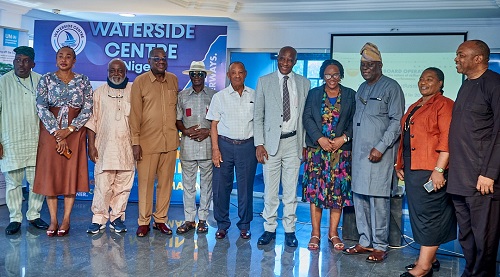
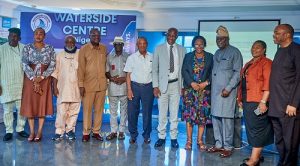
Participants at the event..
• Demand accountability in training, policy and cabotage funding
Maritime industry leaders have called on governments in the African region to stop outsourcing the continent’s future to distant global platforms, demanding that instead
the continent should set its own agenda in shaping economic, professional and regulatory priorities.
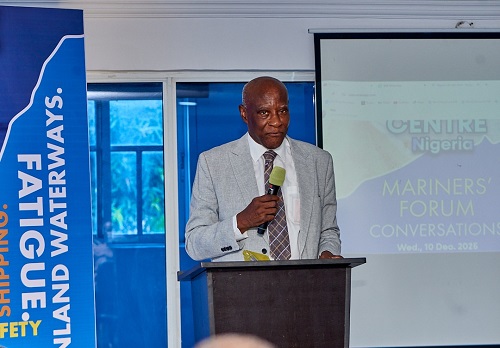
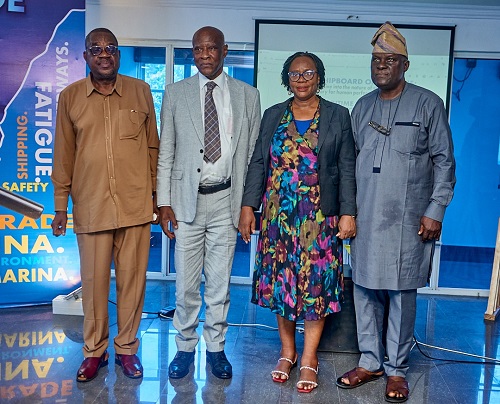
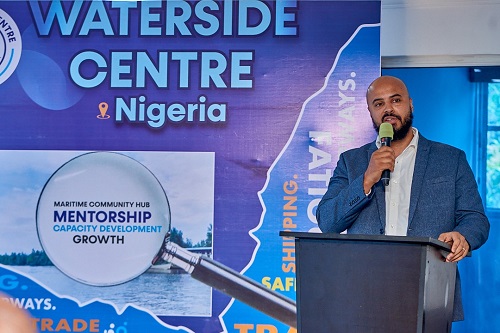
The maritime industry leaders who met at a high-level Mariners Forum Conversation on Wednesday at the Waterside Centre in Lagos, maintained that Africa must be able to address their own challenges and set agenda for necessary development.
Chairman of the Waterside Centre and former Minister of Interior, Capt. Emmanuel Iheanacho, said Africa must establish dedicated platforms to address long-ignored challenges around public health, poverty, trade and professional development.
Iheanacho, who is also Chairman of Integrated Oil and Gas, faulted global conferences often hosted in non-African venues for sidelining African priorities.
He argued that the continent must convert dialogue into enforceable policies, insisting that domestic platforms are capable of driving meaningful change.
“We don’t need to go to Brazil or Europe. We can host our conversations here. We can shape our own policies,” he said.
He noted that African professionals had, for decades, lacked opportunities to openly debate issues affecting citizens and workers, praising emerging regional efforts that now allow unfiltered engagement on maritime and economic matters.
His presentation examined “The Integrated Future of Support for Professionals,” spotlighting deep skill gaps in a shipping industry rapidly reinvented by autonomy, digitalisation and advanced connectivity.
According to him, vessels are evolving into drone-like platforms armed with sensors, AI and IoT systems capable of unmanned operations. This shift demands new competencies from seafarers, including digital literacy, data analysis, mastery of automated and electronic systems, environmental and regulatory proficiency, smart device operations and strong communication and leadership skills.
Environmental protection, he added, now requires near-scientific understanding, with outdated practices such as dumping waste or discharging untreated ballast water firmly rejected under global regulations.
Also speaking, the Managing Director of OceanDeep Services Limited and President of WIMA Nigeria, Mrs. Rollens Macfoy, echoed his concerns, calling for a coordinated pressure group to confront longstanding deficiencies in Nigeria’s maritime training and certification regime.
She lamented decades of inadequate support for local cadets, despite her international experience training professionals across Ghana, the UK and Germany.
Macfoy criticised a system where Nigerian youths remain uncompetitive against better-certified foreigners who secure high-paying positions, including captains earning $8,000 to $10,000 monthly, while waiver payments hover around $1,000 annually.
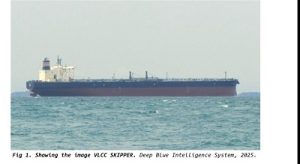
She equally faulted systemic barriers from non-technocrat political leadership to the scarcity of vessels for onboard training and queried why cadets must rely on expensive foreign programmes instead of being placed on domestic VLCCs.
She urged regulators, maritime institutions and agency chiefs to confront these gaps directly, including deploying inspection teams to audit facilities and enforcing compliance to build a skilled and globally competitive workforce.
According to her, without continuous pressure, Nigeria risks repeating ’20 years of inaction’ that stifled past efforts, including now-defunct sponsorships once offered by organisations like Kia Motors.
On his part, the President of the Nigerian Association of Master Mariners (NAMM), Capt. Tajudeen Alao, turned attention to cabotage financing reforms, questioning why the Cabotage Vessel Financing Fund (CVFF) had strayed from its original purpose.
Tracing the history of Cabotage to the 1987 shipping regulation under Decree 10, he said the framework mandated that 2–3% of ship assessments be channelled into indigenous ship promotion, acquisition and repayment support.
“At what point did government alter the purpose of this fund?” he asked, warning that unilateral changes erode industry confidence and threaten Nigeria’s maritime capacity development.
He also admonished stakeholders to challenge policy inconsistencies and insist on alignment with the original intent: strengthening indigenous shipping rather than erecting new barriers or funding unrelated initiatives.
“The government cannot keep shifting direction without the consent of the people,” he said.
While welcoming the participants to the event, the CEO of Waterside Centre, Dr. Hope Orivri, remarked that the Centre has settled into its own space and is now open to maritime industry hubs to address the myriad of issues bothering them even as the centre serves as a social network for people to share motivation and inspiration.
Her words: “We are confident that the new Centre will help the industry connect with the coastal communities in a manner that their voices will be heard, they will be seen and engaged frequently. At the Waterside Centre, we won’t just speak for jamboree but also intermitently review activities for impact because our goal is to impact the community of shippers, ship-owning individuals and companies, maritime lawyers, stevedores, dockworkers, maritime arbitrators, maritime media, mariners, among other groups in the sector.
“Nigeria is a rich naritime nation, but we shouldn’t just be saying this to feel good, we should be able to have results and lead in certain key maritime areas to demonstrate our capabilities in the maritime domain.”
The occasion was graced by scores of master mariners and veteran marine engineers including; President of the Association of Marine Engineers and Surveyors (AMES), Engr. Israel Obadan; Chairman of Nigerian Ports Consultative Council (NPCC), Mr. Bolaji Sunmola; among others.
About Post Author