Iranian Navy’s Training Ships Seek Refuge From War, With Cadets Aboard

FLAGS OF IMO MEMBER STATES
As Iran claims to strike tanker for running Strait of Hormuz blockade
(The Maritime Executive) The two Iranian naval vessels given refuge in foreign ports this week, IRINS Bushehr (K422) in Kochi, India and IRINS Lavan (L514) in Sri Lanka, were on a training cruise for naval cadets from the Iranian Navy’s Naval Academy at Nowshahr, formally known as the Iman Khomeini University for Naval Science. This explains why both ships had unusually large crews.
The six-week winter training cruise for naval cadets was an annual event. The training cruise in 2025 was conducted by IRINS Bushehr and IRINS Lavan, making up the 100th Flotilla. Last year’s flotilla made port calls in Mumbai and at Colombo, receiving a warm welcome from the host navies in both ports. Cadets were also given a taste of service in an operational area, as the flotilla also spent some time in the Gulf of Aden. While Mumbai and Colombo are regular ports of call for the winter training cruise, in some years both Muscat and Karachi have been visited.
Both ships are very old: the fleet supply ship IRINS Bushehr was built in Germany in 1974 and the landing ship IRINS Lavan at Yarrow in Glasgow in 1985. IRINS Lavan and her sister ship IRINS Tunb (L513) have both been used in the past during exercises as drone-firing platforms. From pictures of the ships alongside in Colombo last year, both appear to be heavily rusted and IRINS Lavan in particular looked of doubtful seaworthiness. Hence the request from IRINS Bushehr to dock in India because of mechanical issues is credible.
In accordance with the internationally-recognized Law of Naval Warfare, warships of a belligerent nation calling at a neutral port may remain only for 24 hours and under strict conditions; crews and ships which breach these conditions are subject to internment until the cessation of hostilities.
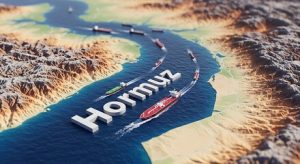
Meanwhile, on Saturday morning, the Islamic Revolutionary Guard Corps (IRGC) claimed to have struck an oil tanker for failing to abide by Iran’s “closure” of the strait of Hormuz.
Iran declared the strait to be shut more than a week ago, and has repeatedly attacked vessels that attempt to operate it, including one boxship and one rescue tug. Eight seafarers aboard the tug may have lost their lives, though the outcome of the attack has not been confirmed.
Industry sources confirm that a small number of tankers continue to continue to transit the strait with transponders off, though the waterway looks entirely empty on AIS tracking. War risk insurance is available, if exceptionally expensive, and day rates for tankers are high enough for some owners to justify the risk to their crewmembers and their tonnage.
That risk appeared to be confirmed Friday when IRGC Navy belligerents claimed to have used a drone to attack the tanker Prima, “due to its disregard for repeated warnings . . . regarding the prohibition of passage.”
• Culled from The Maritime Executive

(The Maritime Executive) The two Iranian naval vessels given refuge in foreign ports this week, IRINS Bushehr (K422) in Kochi, India and IRINS Lavan (L514) in Sri Lanka, were on a training cruise for naval cadets from the Iranian Navy’s Naval Academy at Nowshahr, formally known as the Iman Khomeini University for Naval Science. This explains why both ships had unusually large crews.
The six-week winter training cruise for naval cadets was an annual event. The training cruise in 2025 was conducted by IRINS Bushehr and IRINS Lavan, making up the 100th Flotilla. Last year’s flotilla made port calls in Mumbai and at Colombo, receiving a warm welcome from the host navies in both ports. Cadets were also given a taste of service in an operational area, as the flotilla also spent some time in the Gulf of Aden. While Mumbai and Colombo are regular ports of call for the winter training cruise, in some years both Muscat and Karachi have been visited.
Both ships are very old: the fleet supply ship IRINS Bushehr was built in Germany in 1974 and the landing ship IRINS Lavan at Yarrow in Glasgow in 1985. IRINS Lavan and her sister ship IRINS Tunb (L513) have both been used in the past during exercises as drone-firing platforms. From pictures of the ships alongside in Colombo last year, both appear to be heavily rusted and IRINS Lavan in particular looked of doubtful seaworthiness. Hence the request from IRINS Bushehr to dock in India because of mechanical issues is credible.
In accordance with the internationally-recognized Law of Naval Warfare, warships of a belligerent nation calling at a neutral port may remain only for 24 hours and under strict conditions; crews and ships which breach these conditions are subject to internment until the cessation of hostilities.
Meanwhile, on Saturday morning, the Islamic Revolutionary Guard Corps (IRGC) claimed to have struck an oil tanker for failing to abide by Iran’s “closure” of the strait of Hormuz.
Iran declared the strait to be shut more than a week ago, and has repeatedly attacked vessels that attempt to operate it, including one boxship and one rescue tug. Eight seafarers aboard the tug may have lost their lives, though the outcome of the attack has not been confirmed.
Industry sources confirm that a small number of tankers continue to continue to transit the strait with transponders off, though the waterway looks entirely empty on AIS tracking. War risk insurance is available, if exceptionally expensive, and day rates for tankers are high enough for some owners to justify the risk to their crewmembers and their tonnage.
That risk appeared to be confirmed Friday when IRGC Navy belligerents claimed to have used a drone to attack the tanker Prima, “due to its disregard for repeated warnings . . . regarding the prohibition of passage.”
• Culled from The Maritime Executive
About Post Author