We Shall Play Broader Role of Ensuring Nigerian Ports Compete Fairly, Efficiently and Transparently – NPERA DG
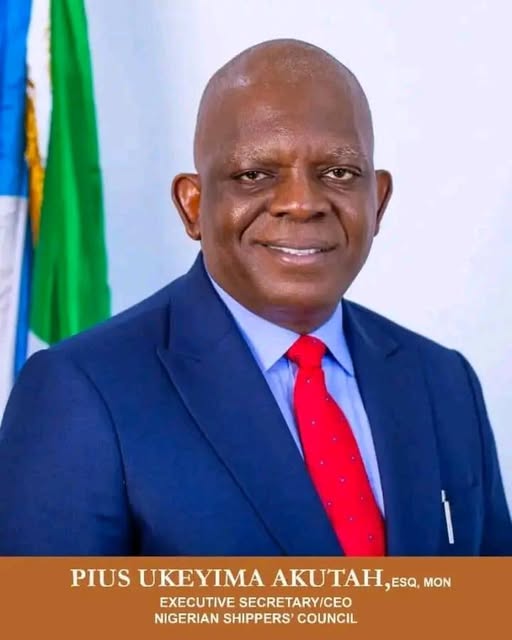
Dr. Akutah

The Director-General of the Nigerian Ports Economic Regulatory Agency, (NPERA), Dr. Akutah Pius, has assured that his agency shall work towards creating the conditions under which Nigerian ports can compete fairly, efficiently and transparently.
Noting that its role is now much broader than the regulation of tariffs, Akutah said that the agency occupies a strategic position at the intersection of regulation, trade facilitation and national economic development.
He emphasized that its mandate shall be to protect shippers, promote competition, regulate economic activities, monitor service standards, facilitate dispute resolution and reduce the cost of doing business.
In a paper presentation at a seminar organised by the League of Maritime Editors last week in Lagos, Akutah explained that such focus shall bring about a significant influence over the structure and performance of Nigeria’s port system.
In his paper titled “The Role of the Nigerian Port Economic Regulatory Agency in Ensuring Equitable Cargo Distribution Across Nigeria Ports’, he added, “but equitable cargo distribution cannot be achieved through regulation alone”.
Akutah who was represented on the occasion by the Acting Director, Ports Monitoring and Regulatory Services, Ms Adaora Nwonu, added: “It requires a combination of competitive ports, efficient terminals, transparent charges, reliable shipping services, modern customs processes, digital systems, effective rail and inland-waterway connections and a strong regulatory framework.
“The objective should not be to force cargo away from one port and towards another.
“Rather, Nigeria should create a port system in which no port is artificially favoured, no port is unnecessarily disadvantaged, and every viable port has the opportunity to compete for cargo on the basis of efficiency, cost, capacity and service quality.
“This is the essence of trade facilitation.
“And this is where the Nigerian Shippers’ Council can make one of its most consequential contributions to Nigeria’s maritime future: not only by regulating ports, but by helping to create a competitive national port economy in which cargo moves through the most efficient corridor to its final destination”.
He challenged the media to keep asking the difficult question:
“Are Nigeria’s ports competing for cargo, or are Nigeria’s cargoes still competing for access to a few preferred ports?”
The answer, according to him, “will tell us much about whether Nigeria’s port reforms are truly delivering the competitive, efficient and trade-friendly maritime economy that the country needs”.
On the cargo imbalance in the ports of Delta, Onne, Portharcourt, Calabar ports, he said, “Nigeria should not approach cargo distribution as a political contest among ports”.
He continued, “It should approach it as a national competitiveness challenge.
“The ultimate objective should be to build a Nigerian port system in which Lagos, the Eastern ports, Lekki and other viable ports complement one another rather than compete under unequal conditions.
“Such a system would produce several benefits:
• lower logistics costs;
• reduced congestion;
• shorter cargo dwell times;
• better utilisation of port infrastructure;
• increased private-sector investment;
• stronger regional economies;
• improved export competitiveness;
• greater resilience in national supply chains; and
• enhanced Nigeria’s position as a maritime and logistics hub in West Africa”.
About Post Author