We Want Inter-Agency Collaboration to End Cargo Delays, Achieve Complete Ports Efficiency – NSC CEO, Akutah
By Our Correspondent
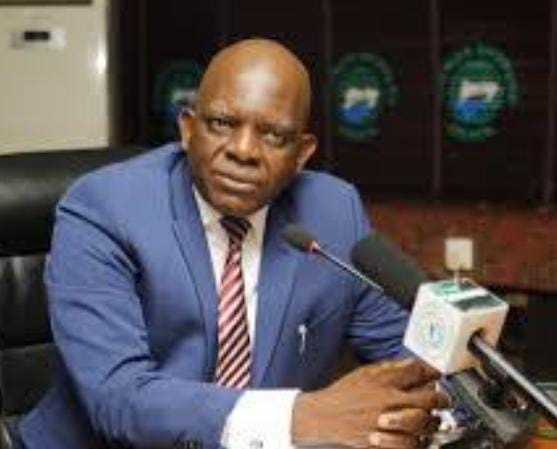
The Executive Secretary/CEO, Nigerian Shippers’ Council (NSC) Dr. Pius Akutah, has advocated for a strong inter-agency collaboration that will bring a solution to cargo clearance delays and achieve ports efficiency in the country.
Akutah said this will also lead to reduction in cargo damage, legal and financial disputes as a result of delays in port operations.
The NSC CEO who spoke during a technical session at the just concluded 18th International Maritime Seminar for Judges in Abuja, pointed out that the consequences of cargo delays are legal and financial implications.
He stated that greater synergy among regulatory agencies in the Ministry of Marine and Blue Economy can help to improve operational efficiency in the ports.
Akutah said that inefficiencies as a result of weak inter-agency coordination are capable of posing significant challenges to the shipping industry in the country.
He added that this leads to avoidable delays, increased costs, cargo deterioration, and protracted litigation.
He pointed out that while some legal experts at the seminar had advocated for legislation to protect port terminal operators under concession agreements, the proposed Nigerian Port Economic Regulatory Agency (NPERA) Bill, which designates the Nigerian Shippers’ Council as the statutory Port Economic Regulator, will provide the regulatory framework necessary to address many of the operational and commercial challenges affecting port services and cargo clearance in the country.
Akutah assured that legislation will strengthen economic regulation within the port sector, promote efficiency, enhance accountability, and create a more predictable business environment for investors and port users.
On the importance of the International Maritime Seminar for Judges, he said it is a critical platform for strengthening judicial capacity in maritime law and improving the resolution of maritime disputes.
According to him, “The importance of maritime cases cannot be overemphasised. This seminar provides an important opportunity for judges handling maritime matters to deepen their knowledge while enabling stakeholders to identify areas requiring improvement for the growth of the sector.”
Akutah maintained that sustained engagement between the judiciary and maritime stakeholders would further support the development of Nigeria’s maritime industry by promoting faster and more efficient dispute resolution.
He said that this was as delays in the adjudication of maritime cases can discourage investment and undermine confidence in the judicial system in the country.
Akutah added. “No investor will bring capital into a country where there is no confidence in the judicial system. Maritime disputes are often complex, time-consuming and expensive to resolve. One of the key objectives of this seminar is to promote alternative dispute resolution mechanisms that will ensure quicker settlement of maritime disputes and inspire investor confidence in Nigeria’s maritime sector”

The Executive Secretary/CEO, Nigerian Shippers’ Council (NSC) Dr. Pius Akutah, has advocated for a strong inter-agency collaboration that will bring a solution to cargo clearance delays and achieve ports efficiency in the country.
Akutah said this will also lead to reduction in cargo damage, legal and financial disputes as a result of delays in port operations.
The NSC CEO who spoke during a technical session at the just concluded 18th International Maritime Seminar for Judges in Abuja, pointed out that the consequences of cargo delays are legal and financial implications.
He stated that greater synergy among regulatory agencies in the Ministry of Marine and Blue Economy can help to improve operational efficiency in the ports.
Akutah said that inefficiencies as a result of weak inter-agency coordination are capable of posing significant challenges to the shipping industry in the country.
He added that this leads to avoidable delays, increased costs, cargo deterioration, and protracted litigation.
He pointed out that while some legal experts at the seminar had advocated for legislation to protect port terminal operators under concession agreements, the proposed Nigerian Port Economic Regulatory Agency (NPERA) Bill, which designates the Nigerian Shippers’ Council as the statutory Port Economic Regulator, will provide the regulatory framework necessary to address many of the operational and commercial challenges affecting port services and cargo clearance in the country.
Akutah assured that legislation will strengthen economic regulation within the port sector, promote efficiency, enhance accountability, and create a more predictable business environment for investors and port users.
On the importance of the International Maritime Seminar for Judges, he said it is a critical platform for strengthening judicial capacity in maritime law and improving the resolution of maritime disputes.
According to him, “The importance of maritime cases cannot be overemphasised. This seminar provides an important opportunity for judges handling maritime matters to deepen their knowledge while enabling stakeholders to identify areas requiring improvement for the growth of the sector.”
Akutah maintained that sustained engagement between the judiciary and maritime stakeholders would further support the development of Nigeria’s maritime industry by promoting faster and more efficient dispute resolution.
He said that this was as delays in the adjudication of maritime cases can discourage investment and undermine confidence in the judicial system in the country.
Akutah added. “No investor will bring capital into a country where there is no confidence in the judicial system. Maritime disputes are often complex, time-consuming and expensive to resolve. One of the key objectives of this seminar is to promote alternative dispute resolution mechanisms that will ensure quicker settlement of maritime disputes and inspire investor confidence in Nigeria’s maritime sector”
About Post Author